REF: MEN-2026-0092
Radiology
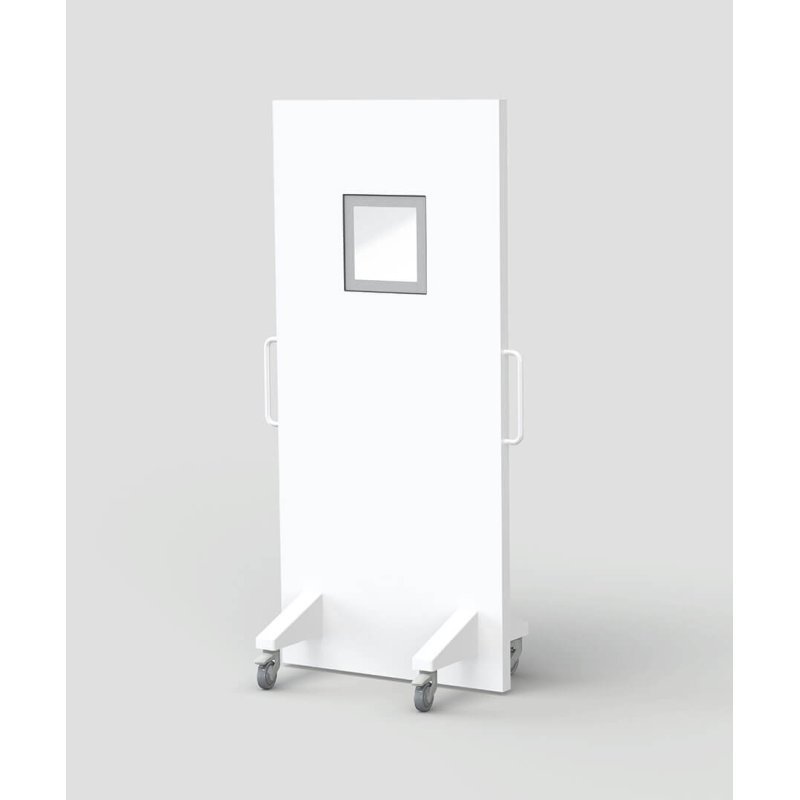
Lead Screen
Sold & Shipped By
Official Store
₦4,000,000.00
Product Code MEN-2026-0092
Condition New
Availability In Stock
Warranty 1 year
Sub-Category X-ray
Lead Shielding Core: The core consists of lead plate or lead-equivalent material, typically ranging from 0.5mm to 2mm Pb or higher for enhanced protection.
Lead Glass Viewing Window: Equipped with a transparent lead-glass window to allow practitioners to maintain visual contact with the patient while staying protected.
Mobility and Stability: Often designed with heavy-duty, lockable, and swivel castors for easy positioning, with sturdy steel or aluminum frames.
Hygiene and Durability: Surfaced with durable, easy-to-clean, and disinfectant-friendly materials (e.g., plastic laminate) that meet medical hygiene standards.
Dimensions: Commonly available in sizes like 3x6 feet to provide full-body coverage, though custom sizes are available.
Structural Variations: Available in straight, multi-winged, or hinged, and mobile or fixed configurations to suit different room layouts.
Safety Standards: Manufactured to meet radiation protection standards, such as those defined by NHS Health Building Notes or ISO 9001.
Lead Glass Viewing Window: Equipped with a transparent lead-glass window to allow practitioners to maintain visual contact with the patient while staying protected.
Mobility and Stability: Often designed with heavy-duty, lockable, and swivel castors for easy positioning, with sturdy steel or aluminum frames.
Hygiene and Durability: Surfaced with durable, easy-to-clean, and disinfectant-friendly materials (e.g., plastic laminate) that meet medical hygiene standards.
Dimensions: Commonly available in sizes like 3x6 feet to provide full-body coverage, though custom sizes are available.
Structural Variations: Available in straight, multi-winged, or hinged, and mobile or fixed configurations to suit different room layouts.
Safety Standards: Manufactured to meet radiation protection standards, such as those defined by NHS Health Building Notes or ISO 9001.
Lead Equivalent (Shielding Capacity): Standard protective lead screens offer between 0.5mmPb and 2mmPb (lead equivalent) protection. Some, like those used in specific surgery or high-dose scenarios, may range from 1mmPb to 5mmPb, or higher, depending on the required level of attenuation.
Lead Purity: The lead used for shielding typically has a high purity, often rated at 99.9%.
Dimensions: Common standard dimensions for mobile lead screens are often around 1800 x 900mm (3x6 feet) or 1800 x 1600mm for multi-panel models, though they are highly customizable.
Lead Glass Viewing Window: Most models feature a lead glass window for safe observation. Common sizes for these windows include 6x8 inches, or ranging from 15x20cm to 60x80cm. The lead equivalent of the glass must match or exceed the screen's overall rating.
Structure/Material: The internal structure usually consists of lead sheets sandwiched between, or coated with, steel plates, MDF, or aluminum to ensure durability. The surface is often finished with powder coating or washable, antiseptic leather/PVC, making them easy to clean.
Mobility: Mobile screens are equipped with 4 to 6 casters, usually with locks, allowing for easy movement in operating rooms, radiography, or dental suites.
Panel Configuration: Available in single, double, or triple-panel configurations.
Lead Purity: The lead used for shielding typically has a high purity, often rated at 99.9%.
Dimensions: Common standard dimensions for mobile lead screens are often around 1800 x 900mm (3x6 feet) or 1800 x 1600mm for multi-panel models, though they are highly customizable.
Lead Glass Viewing Window: Most models feature a lead glass window for safe observation. Common sizes for these windows include 6x8 inches, or ranging from 15x20cm to 60x80cm. The lead equivalent of the glass must match or exceed the screen's overall rating.
Structure/Material: The internal structure usually consists of lead sheets sandwiched between, or coated with, steel plates, MDF, or aluminum to ensure durability. The surface is often finished with powder coating or washable, antiseptic leather/PVC, making them easy to clean.
Mobility: Mobile screens are equipped with 4 to 6 casters, usually with locks, allowing for easy movement in operating rooms, radiography, or dental suites.
Panel Configuration: Available in single, double, or triple-panel configurations.
Radiology and Imaging Protection: Used in radiology departments to shield staff, technicians, and patients from scatter radiation produced during X-ray, fluoroscopy, and computed tomography (CT) scans.
Interventional Procedures: Deployed in operating rooms and cardiac catheterization labs (e.g., for angiography) to protect doctors and nurses from continuous radiation exposure while they remain near the patient.
Dental Imaging Safety: Utilized in dental clinics to block X-ray radiation during imaging, typically positioned to protect staff from the primary beam.
Mobile Shielding: Mobile lead screens (on wheels) provide flexible protection, allowing them to be easily repositioned in emergency rooms, clinics, or for portable bedside imaging.
Fixed Partitioning: Permanently installed Lead-lined barriers are used to separate X-ray control areas from scanning rooms.
Industrial Inspection: Used in laboratory and industrial settings to protect workers from radiation sources during the testing of materials
Interventional Procedures: Deployed in operating rooms and cardiac catheterization labs (e.g., for angiography) to protect doctors and nurses from continuous radiation exposure while they remain near the patient.
Dental Imaging Safety: Utilized in dental clinics to block X-ray radiation during imaging, typically positioned to protect staff from the primary beam.
Mobile Shielding: Mobile lead screens (on wheels) provide flexible protection, allowing them to be easily repositioned in emergency rooms, clinics, or for portable bedside imaging.
Fixed Partitioning: Permanently installed Lead-lined barriers are used to separate X-ray control areas from scanning rooms.
Industrial Inspection: Used in laboratory and industrial settings to protect workers from radiation sources during the testing of materials