REF: MEN-2026-0066
Radiology
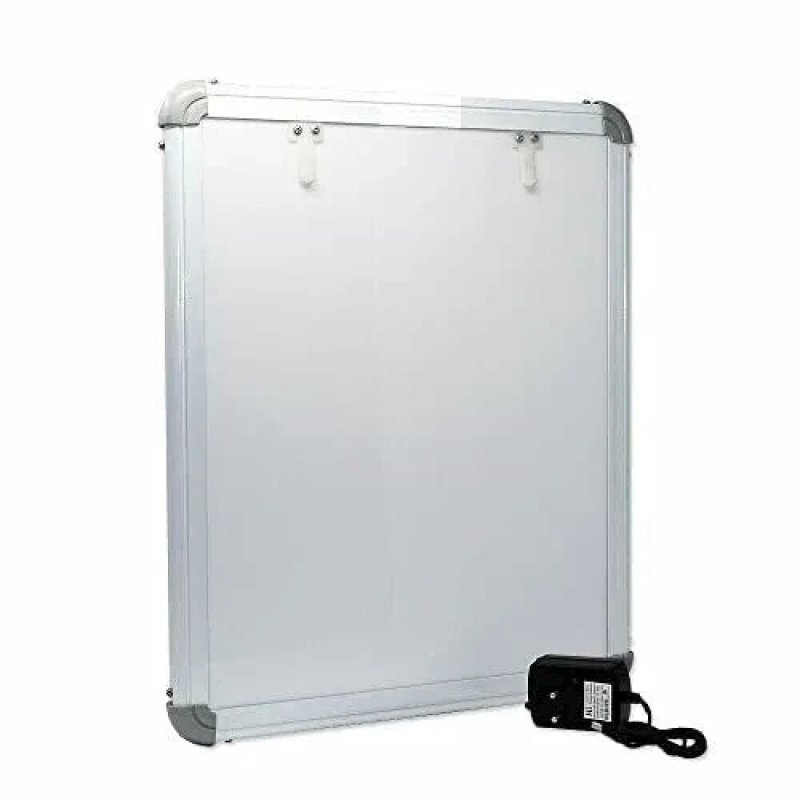
X-ray Film Illuminator
Sold & Shipped By
Official Store
Price on Request
Product Code MEN-2026-0066
Condition New
Availability On request
Warranty 1 year
Sub-Category X-ray
Modern X-ray film illuminators feature energy-efficient, high-brightness LED light sources (often
) with uniform, glare-free, and flicker-free illumination, typically offering adjustable brightness (1%–100%) and color temperatures around 10,000K for reduced eye strain. They are designed with slim profiles (2-4cm), durable aluminum alloy frames, and automatic film-sensing switches for improved diagnostic efficiency.
) with uniform, glare-free, and flicker-free illumination, typically offering adjustable brightness (1%–100%) and color temperatures around 10,000K for reduced eye strain. They are designed with slim profiles (2-4cm), durable aluminum alloy frames, and automatic film-sensing switches for improved diagnostic efficiency.
Technology: Modern units use LED, which offers 4–5 times longer lifespan and lower energy consumption compared to traditional fluorescent tubes.
Brightness (Luminance): High-quality LED illuminators generally offer a maximum brightness between 4,000 cd/m² and 4,500 cd/m² (or up to 13,000–16,000 lux). Some, particularly for industrial or specialized diagnostic use, can exceed 100,000 cd/m².
Brightness Adjustment: Stepless, or 100-level, dimming is standard, allowing for precise control of light levels to suit different film densities.
Uniformity: High-grade viewers provide a screen uniformity coefficient of ≥ 90%, ensuring consistent brightness across the entire viewing area without dark spots.
Thickness: Modern LED models are "ultra-thin," with a typical thickness of 2.3cm to 4.5cm (approx. 1 to 1.77 inches).
Material: Constructed with aluminum alloy frames (often electrophoretic for durability) and high-transmittance, white polymethyl methacrylate (acrylic) screens.
Single: ~440 x 500 mm to 480 x 505 mm.
Double: ~830 x 535 mm to 880 x 505 mm. Triple/Quad: Larger sizes are available for multiple films.
Film Retention: Features, such as ball-bearing or silicone rubber clamps, allow for easy insertion and secure holding of films.
Color Temperature: Optimized for reducing eye fatigue, usually between 6,000K and 9,300K.
Automatic Activation: An auto-sensor often activates the light when a film is inserted and turns it off when removed.
Memory Function: Many models include an intelligent memory function that remembers the last brightness setting used.
Flicker-Free: Flicker-free, stable light source is crucial for long-term diagnostic use.
Voltage: Wide voltage adaptability, typically 100V-240V AC, 50/60Hz.
Power Consumption: Generally lower than 30W-45W for single-panel units, up to 90W-100W for multi-panel units.
Brightness (Luminance): High-quality LED illuminators generally offer a maximum brightness between 4,000 cd/m² and 4,500 cd/m² (or up to 13,000–16,000 lux). Some, particularly for industrial or specialized diagnostic use, can exceed 100,000 cd/m².
Brightness Adjustment: Stepless, or 100-level, dimming is standard, allowing for precise control of light levels to suit different film densities.
Uniformity: High-grade viewers provide a screen uniformity coefficient of ≥ 90%, ensuring consistent brightness across the entire viewing area without dark spots.
Thickness: Modern LED models are "ultra-thin," with a typical thickness of 2.3cm to 4.5cm (approx. 1 to 1.77 inches).
Material: Constructed with aluminum alloy frames (often electrophoretic for durability) and high-transmittance, white polymethyl methacrylate (acrylic) screens.
Single: ~440 x 500 mm to 480 x 505 mm.
Double: ~830 x 535 mm to 880 x 505 mm. Triple/Quad: Larger sizes are available for multiple films.
Film Retention: Features, such as ball-bearing or silicone rubber clamps, allow for easy insertion and secure holding of films.
Color Temperature: Optimized for reducing eye fatigue, usually between 6,000K and 9,300K.
Automatic Activation: An auto-sensor often activates the light when a film is inserted and turns it off when removed.
Memory Function: Many models include an intelligent memory function that remembers the last brightness setting used.
Flicker-Free: Flicker-free, stable light source is crucial for long-term diagnostic use.
Voltage: Wide voltage adaptability, typically 100V-240V AC, 50/60Hz.
Power Consumption: Generally lower than 30W-45W for single-panel units, up to 90W-100W for multi-panel units.
Preparation: Ensure the device is securely wall-mounted or placed on a stable, dry surface.
Power On: Toggle the ON/OFF switch to activate the LED or fluorescent lamps.
Position the Film: Place the X-ray film, CT scan, or MRI sheet onto the illuminated screen.
Secure Film: Use the roller clips or magnetic holders at the top of the viewer to hold the film in place.
Adjust Light: If using a modern LED viewer with dimming capabilities, adjust the brightness to optimize contrast for the specific film density.
View & Analyze: Examine the film. The opaline diffuser ensures the light is even and reduces glare.
Power Off: Once finished, remove the film and switch the device off to conserve energy and prevent overheating.
Power On: Toggle the ON/OFF switch to activate the LED or fluorescent lamps.
Position the Film: Place the X-ray film, CT scan, or MRI sheet onto the illuminated screen.
Secure Film: Use the roller clips or magnetic holders at the top of the viewer to hold the film in place.
Adjust Light: If using a modern LED viewer with dimming capabilities, adjust the brightness to optimize contrast for the specific film density.
View & Analyze: Examine the film. The opaline diffuser ensures the light is even and reduces glare.
Power Off: Once finished, remove the film and switch the device off to conserve energy and prevent overheating.