REF: MEN-2026-0142
Surgery
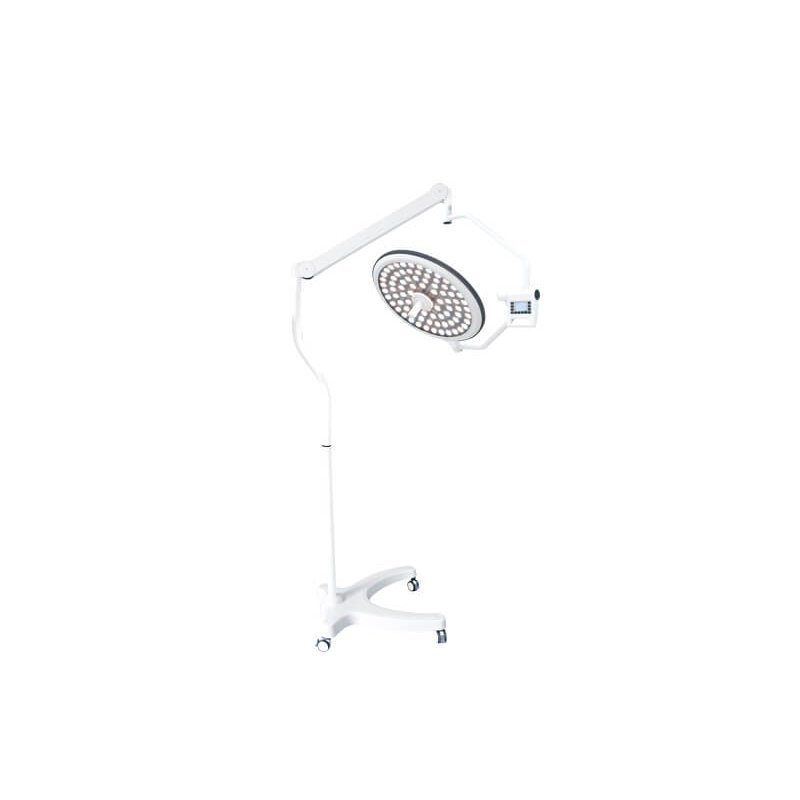
Portable Mobile Surgical Light
Sold & Shipped By
Official Store
Price on Request
Product Code MEN-2026-0142
Condition New
Availability In Stock
Warranty
Sub-Category Light
1. Illumination Performance
High Intensity: Offers high-level illumination, typically ranging from 40,000 to over 160,000 lux at a 1-meter distance.
Color Rendering Index (CRI): High CRI (often
95-97) ensures accurate tissue color rendering and reduces eye fatigue.
Adjustable Color Temperature: Many models allow adjusting the color temperature (e.g., 3500K–5000K) to improve contrast, such as enhancing red tissue visibility (high R9 value).
Dimming Control: Offers adjustable brightness, typically ranging from 1% to 100% or via set intervals (e.g., 10-level adjustment).
2. Mobility and Ergonomics
Wheeled Base: Equipped with a 4- or 5-leg mobile base with lockable, medical-grade silent casters for easy movement between rooms.
Articulated Arm: Features a balanced suspension arm, often with Z-shaped or spring-balanced mechanics, allowing for 340-degree or 360-degree, effortless positioning.
Sterilizable Handle: Includes a central, removable handle that can be autoclaved (up to 135°C) to maintain sterility.
3. Lighthead Design and Technology
LED Technology: Uses LED light sources, which provide a long lifespan (often > 50,000 hours), low power consumption, and minimal heat generation (< 1°C rise at the surgeon's head).
Shadowless Effect: Utilizes multiple, independent LED modules or multi-faceted reflectors to minimize shadows.
Compact/Slim Design: The dome is often aerodynamic to facilitate laminar airflow in clean rooms.
Focus Control: Allows manual adjustment of the light spot diameter (typically 100-300 mm) for deep cavity penetration.
4. Operational Features
Emergency Battery Backup: Many models include a battery system that automatically kicks in during power failures, providing 2.5 to 6 hours of continuous, independent operation.
Endo Mode: Features specialized low-intensity lighting for endoscopic or minimally invasive procedures.
Control Panel: Integrated, easy-to-use control panel (often with LCD screen) to adjust intensity, focus, and color temperature.
Hygiene-Friendly: Designed with smooth, sealed, and water/dustproof (often IP54) surfaces for easy disinfection
High Intensity: Offers high-level illumination, typically ranging from 40,000 to over 160,000 lux at a 1-meter distance.
Color Rendering Index (CRI): High CRI (often
95-97) ensures accurate tissue color rendering and reduces eye fatigue.
Adjustable Color Temperature: Many models allow adjusting the color temperature (e.g., 3500K–5000K) to improve contrast, such as enhancing red tissue visibility (high R9 value).
Dimming Control: Offers adjustable brightness, typically ranging from 1% to 100% or via set intervals (e.g., 10-level adjustment).
2. Mobility and Ergonomics
Wheeled Base: Equipped with a 4- or 5-leg mobile base with lockable, medical-grade silent casters for easy movement between rooms.
Articulated Arm: Features a balanced suspension arm, often with Z-shaped or spring-balanced mechanics, allowing for 340-degree or 360-degree, effortless positioning.
Sterilizable Handle: Includes a central, removable handle that can be autoclaved (up to 135°C) to maintain sterility.
3. Lighthead Design and Technology
LED Technology: Uses LED light sources, which provide a long lifespan (often > 50,000 hours), low power consumption, and minimal heat generation (< 1°C rise at the surgeon's head).
Shadowless Effect: Utilizes multiple, independent LED modules or multi-faceted reflectors to minimize shadows.
Compact/Slim Design: The dome is often aerodynamic to facilitate laminar airflow in clean rooms.
Focus Control: Allows manual adjustment of the light spot diameter (typically 100-300 mm) for deep cavity penetration.
4. Operational Features
Emergency Battery Backup: Many models include a battery system that automatically kicks in during power failures, providing 2.5 to 6 hours of continuous, independent operation.
Endo Mode: Features specialized low-intensity lighting for endoscopic or minimally invasive procedures.
Control Panel: Integrated, easy-to-use control panel (often with LCD screen) to adjust intensity, focus, and color temperature.
Hygiene-Friendly: Designed with smooth, sealed, and water/dustproof (often IP54) surfaces for easy disinfection
Illumination Intensity: Typically ranges between 80,000 and 160,000 lux at 1 meter distance.
Light Source: LED (light-emitting diode) technology is standard, offering long lifespans (over 50,000–60,000 hours) and reduced energy consumption.
Color Temperature: Generally adjustable between 3,500K and 5,000K, often with specific settings for 4,000K, 4,300K, or 4,500K to provide natural, white light.
Color Rendering Index (CRI): High Ra ≥95-97, which allows for accurate tissue color differentiation.
Light Field Diameter (Spot Size): Adjustable, typically in the range of 100mm to 300mm, allowing for focus on specific areas.
Depth of Illumination: ≥ 1000mm to over 1200mm, ensuring deep cavity lighting.
Temperature Rise: Minimal heat emission (< 1°C or < 2°C) at the surgeon's head, which prevents drying of tissue and ensures comfort.
Mobility & Structure: Mounted on a mobile floor stand with 4-5 castors (often with brakes), featuring a balanced spring-loaded arm for easy positioning.
Power & Battery: Usually 110-240V AC, with options for 2.5 to 4-6 hours of emergency battery backup.
Control Interface: Often features a digital touch screen for dimming (10%-100% or multi-stage adjustment) and managing color temperature.
Additional Features: Often includes a sterilisable handle, shadowless effect technology, and sometimes an Endo (endoscopic) mode for low-light conditions
Light Source: LED (light-emitting diode) technology is standard, offering long lifespans (over 50,000–60,000 hours) and reduced energy consumption.
Color Temperature: Generally adjustable between 3,500K and 5,000K, often with specific settings for 4,000K, 4,300K, or 4,500K to provide natural, white light.
Color Rendering Index (CRI): High Ra ≥95-97, which allows for accurate tissue color differentiation.
Light Field Diameter (Spot Size): Adjustable, typically in the range of 100mm to 300mm, allowing for focus on specific areas.
Depth of Illumination: ≥ 1000mm to over 1200mm, ensuring deep cavity lighting.
Temperature Rise: Minimal heat emission (< 1°C or < 2°C) at the surgeon's head, which prevents drying of tissue and ensures comfort.
Mobility & Structure: Mounted on a mobile floor stand with 4-5 castors (often with brakes), featuring a balanced spring-loaded arm for easy positioning.
Power & Battery: Usually 110-240V AC, with options for 2.5 to 4-6 hours of emergency battery backup.
Control Interface: Often features a digital touch screen for dimming (10%-100% or multi-stage adjustment) and managing color temperature.
Additional Features: Often includes a sterilisable handle, shadowless effect technology, and sometimes an Endo (endoscopic) mode for low-light conditions
Preparation and Safety Check
Inspect and Clean: Wipe down the unit with approved, non-chlorine-based disinfectants to maintain aseptic conditions.
Positioning and Power: Move the mobile light into the operating room and lock the castors to ensure the stand remains stable, preventing accidental movement during the procedure.
Power Source: Plug the unit into an electrical outlet or verify the battery backup is charged for uninterruptible operation.
Positioning the Light Head
Sterile Handling: Use the sterile light handle in the center of the light head to adjust its position without breaking sterility.
Range of Motion: Utilize the articulated arms to bring the light head directly over the surgical site, roughly 1 meter away for optimal focusing.
Shadow Reduction: Angle the light head from different directions to ensure the "shadowless" effect, where overlapping beams fill in any shadows created by the surgeon's hands or instruments.
Operation and Adjustment
Activation: Turn on the power switch.
Intensity Control: Adjust the brightness using the dimmer controls (often on the light head or a wall unit) to match the procedure's requirements without causing glare.
Color Temperature: Adjust the light color (if supported) to enhance tissue differentiation, usually between 4000K and 5000K.
Focusing: Adjust the diameter of the light field to illuminate only the necessary area, minimizing scattered light.
Post-Procedure
Turn Off and Cool: Decrease brightness to minimum, then turn off the power.
Sanitize: Clean the light handle and head again to prepare for the next use.
Inspect and Clean: Wipe down the unit with approved, non-chlorine-based disinfectants to maintain aseptic conditions.
Positioning and Power: Move the mobile light into the operating room and lock the castors to ensure the stand remains stable, preventing accidental movement during the procedure.
Power Source: Plug the unit into an electrical outlet or verify the battery backup is charged for uninterruptible operation.
Positioning the Light Head
Sterile Handling: Use the sterile light handle in the center of the light head to adjust its position without breaking sterility.
Range of Motion: Utilize the articulated arms to bring the light head directly over the surgical site, roughly 1 meter away for optimal focusing.
Shadow Reduction: Angle the light head from different directions to ensure the "shadowless" effect, where overlapping beams fill in any shadows created by the surgeon's hands or instruments.
Operation and Adjustment
Activation: Turn on the power switch.
Intensity Control: Adjust the brightness using the dimmer controls (often on the light head or a wall unit) to match the procedure's requirements without causing glare.
Color Temperature: Adjust the light color (if supported) to enhance tissue differentiation, usually between 4000K and 5000K.
Focusing: Adjust the diameter of the light field to illuminate only the necessary area, minimizing scattered light.
Post-Procedure
Turn Off and Cool: Decrease brightness to minimum, then turn off the power.
Sanitize: Clean the light handle and head again to prepare for the next use.