REF: MEN-2026-0126
Surgery
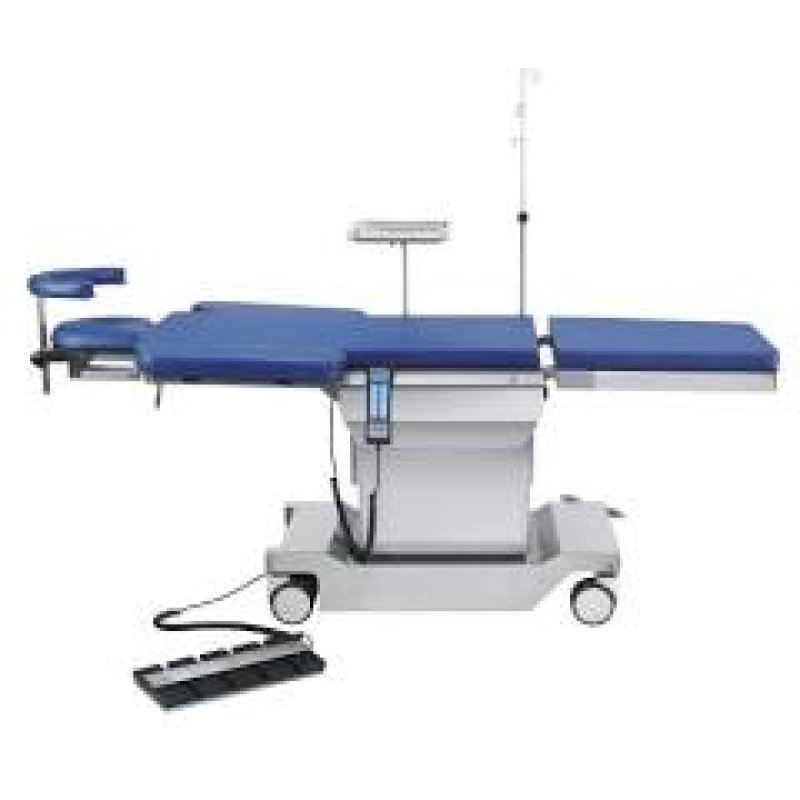
Electric Ophthalmic Operating Table
Sold & Shipped By
Official Store
Price on Request
Product Code MEN-2026-0126
Condition New
Availability In Stock
Warranty
Sub-Category Funiture
Ergonomic Design for Surgeons: Specifically designed to allow surgeons to sit comfortably during procedures, reducing fatigue, with specialized hand rests for stability.
Adjustments: Smooth, electric motor drive for height, backrest, and Trendelenburg (tilt) movements, enabling precise positioning.
Low-Profile Capability: The table can be lowered significantly (often down to ~500mm–550mm) to accommodate seated eye surgery.
Specialized Headrest: Designed for stable, secure immobilization of the patient's head during delicate eye surgeries.
Quality Construction: Made with 304 stainless steel or acid-proof materials, ensuring high durability, easy cleaning, and hygiene.
Patient Comfort and Safety: Often equipped with comfortable, anti-static, or memory foam mattresses.
Versatile Positioning: Features like Trendelenburg/Reverse Trendelenburg and back lift (often
) allow for varied surgical angles.
T-Shaped Base: Provides easy access and allows for comfortable placement of foot-operated controllers.
Adjustments: Smooth, electric motor drive for height, backrest, and Trendelenburg (tilt) movements, enabling precise positioning.
Low-Profile Capability: The table can be lowered significantly (often down to ~500mm–550mm) to accommodate seated eye surgery.
Specialized Headrest: Designed for stable, secure immobilization of the patient's head during delicate eye surgeries.
Quality Construction: Made with 304 stainless steel or acid-proof materials, ensuring high durability, easy cleaning, and hygiene.
Patient Comfort and Safety: Often equipped with comfortable, anti-static, or memory foam mattresses.
Versatile Positioning: Features like Trendelenburg/Reverse Trendelenburg and back lift (often
) allow for varied surgical angles.
T-Shaped Base: Provides easy access and allows for comfortable placement of foot-operated controllers.
Dimensions: Approximately 1900–2000 mm in length and 520–600 mm in width.
Height Adjustment (Electric): Range typically spans 500 mm to 900 mm. Crucially, many models offer a low minimum height (500-550 mm) to facilitate comfortable seated operation.
Load Capacity: Generally ranges between 180 kg and 250 kg.
Trendelenburg/Reverse: Frequently up to 25°–30°.
Back Section: Often adjustable from -20° up to +60°/+80°.
Head Section: Adjustable, frequently with a U-shaped headrest for ophthalmology, with movements ranging from +45° to -90°.
Motorization & Power: Low-noise DC motors (often 24V or AC 220V/110V) with hand-held remote controls or foot pedals.
Battery Backup: built-in battery system for continued operation during power failures
Height Adjustment (Electric): Range typically spans 500 mm to 900 mm. Crucially, many models offer a low minimum height (500-550 mm) to facilitate comfortable seated operation.
Load Capacity: Generally ranges between 180 kg and 250 kg.
Trendelenburg/Reverse: Frequently up to 25°–30°.
Back Section: Often adjustable from -20° up to +60°/+80°.
Head Section: Adjustable, frequently with a U-shaped headrest for ophthalmology, with movements ranging from +45° to -90°.
Motorization & Power: Low-noise DC motors (often 24V or AC 220V/110V) with hand-held remote controls or foot pedals.
Battery Backup: built-in battery system for continued operation during power failures
Power & Setup: Switch on the main power; the system usually requires a charged battery or main socket connection.
Positioning: Use the remote to adjust height, back, and leg sections. For eye surgery, lower the table (some models go as low as
) to allow the surgeon to operate while seated.
Headrest Adjustment: Open the headrest using the wing screw or ball joint to position the patient's head, then secure it.
Safety & Stability: Engage the wheel locks to prevent movement during surgery.
Emergency & Memory: Use the emergency button for rapid Trendelenburg positioning. Utilize memory functions (M1–M8) to recall preferred positions
Positioning: Use the remote to adjust height, back, and leg sections. For eye surgery, lower the table (some models go as low as
) to allow the surgeon to operate while seated.
Headrest Adjustment: Open the headrest using the wing screw or ball joint to position the patient's head, then secure it.
Safety & Stability: Engage the wheel locks to prevent movement during surgery.
Emergency & Memory: Use the emergency button for rapid Trendelenburg positioning. Utilize memory functions (M1–M8) to recall preferred positions