REF: MEN-2026-0129
Surgery
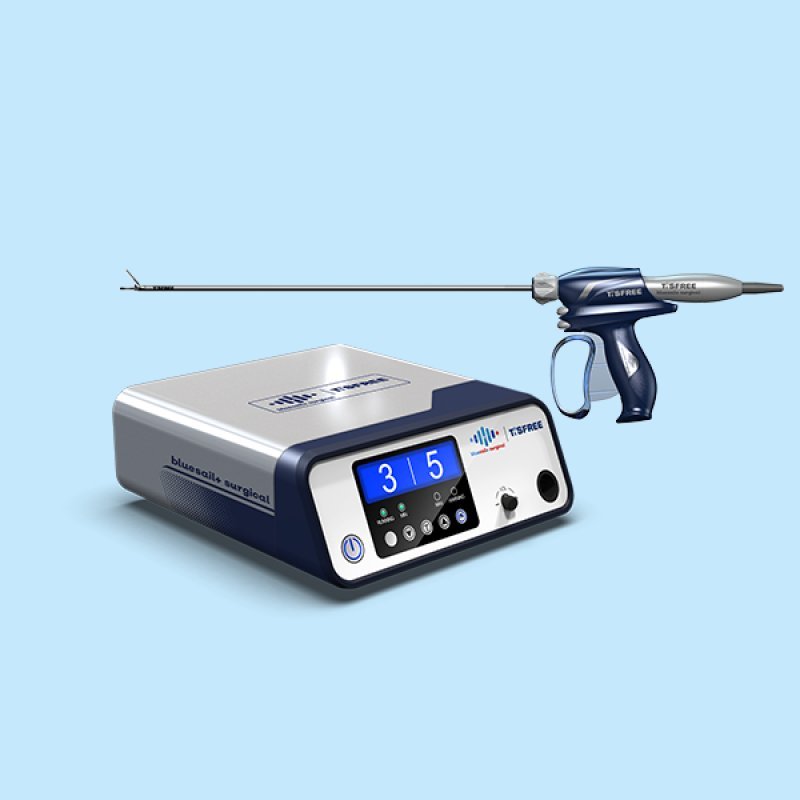
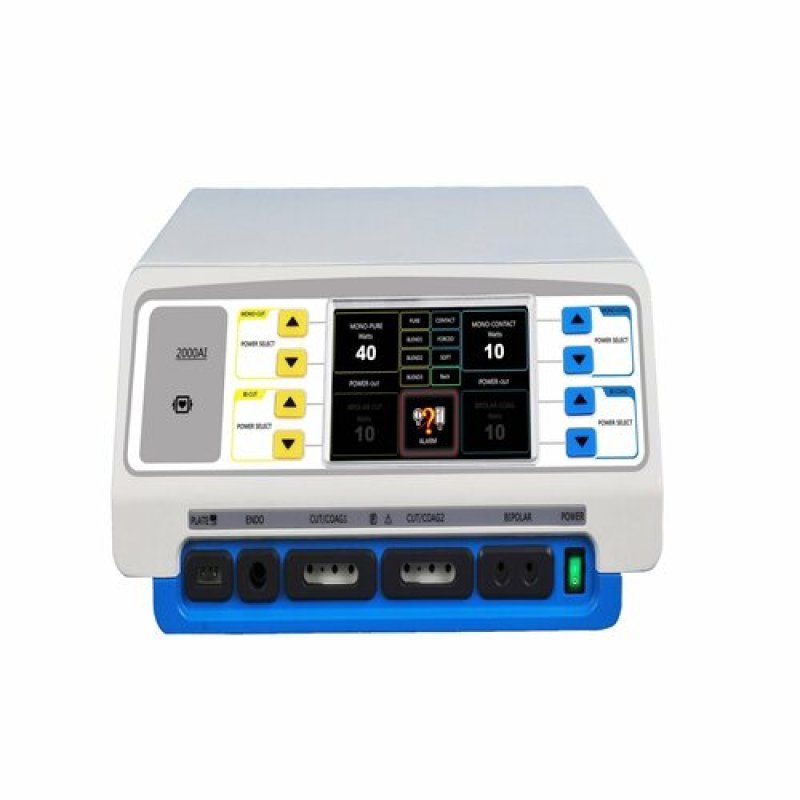
Electrosurgical Unit
Sold & Shipped By
Official Store
Price on Request
Product Code MEN-2026-0129
Condition New
Availability On request
Warranty
Sub-Category Monitoring
Operating Modes:
Monopolar: Requires a grounding pad (return electrode) on the patient. Used for cutting and coagulation via a handheld pencil.
Bipolar: Current flows only between two tips of forceps (active and return electrodes combined). Ideal for precise coagulation in wet fields without a patient return pad.
Blend: Combines cutting and coagulating waveforms simultaneously.
Safety Features:
Return Electrode Monitoring (REM): Monitors the patient pad to prevent burns if the connection fails.
High-Frequency Current: Operates above neural response levels to prevent patient muscle stimulation.
Visual/Audible Alarms: Alerts for system errors or improper grounding.
Performance & Control:
Power Output Control: Allows precise adjustment for different tissue types.
Tissue Sensing Technology: Automatically adjusts power based on tissue resistance.
Foot/Hand Switch Controls: Enables easy, sterile switching between cutting and coagulation modes.
Monopolar: Requires a grounding pad (return electrode) on the patient. Used for cutting and coagulation via a handheld pencil.
Bipolar: Current flows only between two tips of forceps (active and return electrodes combined). Ideal for precise coagulation in wet fields without a patient return pad.
Blend: Combines cutting and coagulating waveforms simultaneously.
Safety Features:
Return Electrode Monitoring (REM): Monitors the patient pad to prevent burns if the connection fails.
High-Frequency Current: Operates above neural response levels to prevent patient muscle stimulation.
Visual/Audible Alarms: Alerts for system errors or improper grounding.
Performance & Control:
Power Output Control: Allows precise adjustment for different tissue types.
Tissue Sensing Technology: Automatically adjusts power based on tissue resistance.
Foot/Hand Switch Controls: Enables easy, sterile switching between cutting and coagulation modes.
1. Power Output and Modes
Maximum Power Output: Usually ranges from 100W to 400W for monopolar functions and 50W to 120W for bipolar functions.
Operating Modes:
Monopolar Cut: Pure cut, Blend 1, 2, 3 (combinations of cutting and coagulation).
Monopolar Coagulation: Desiccate (soft, deep) and Fulgurate (spray).
Bipolar: Coagulation (standard) and sometimes Bipolar Cut.
Output Frequency: Typically ranges between 350-500 kHz.
Tissue Impedance Monitoring: Advanced units automatically adjust power in real-time based on tissue resistance (e.g., 6SENSE technology).
2. Safety Features
Neutral Electrode Monitoring (NEM/REM System): Continuously monitors the impedance of the patient return electrode (grounding pad) and cuts power if it is improperly attached, preventing patient burns.
HF Leakage Monitoring: Detects and limits high-frequency leakage to prevent unintentional burns.
Defibrillation Protection: Protects the unit's circuitry during cardiac resuscitation procedures.
Self-Test Mechanism: Automatic startup tests to check the integrity of components and accessories.
3. Operational and Design Specs
Interface: Digital touch screen or LCD display for power settings.
Control Mechanisms: Hand-switching pencils (2 buttons for cut/coag) or foot-switches (monopolar and bipolar).
Memory Settings: Ability to store user-defined or last-used settings (e.g., up to 99 user profiles).
Dimension/Weight: Compact designs, often 3.5 kg to 10 kg, making them portable, though they can be mounted on trolleys.
Power Supply: Usually 100-240 VAC, 50/60 Hz.
4. Accessory Compatibility
Electrode Handles: Reusable or disposable, 4mm shaft standard.
Neutral Electrodes: Disposable split pads or reusable silicone pads.
Bipolar Forceps: Various lengths and tips.
Maximum Power Output: Usually ranges from 100W to 400W for monopolar functions and 50W to 120W for bipolar functions.
Operating Modes:
Monopolar Cut: Pure cut, Blend 1, 2, 3 (combinations of cutting and coagulation).
Monopolar Coagulation: Desiccate (soft, deep) and Fulgurate (spray).
Bipolar: Coagulation (standard) and sometimes Bipolar Cut.
Output Frequency: Typically ranges between 350-500 kHz.
Tissue Impedance Monitoring: Advanced units automatically adjust power in real-time based on tissue resistance (e.g., 6SENSE technology).
2. Safety Features
Neutral Electrode Monitoring (NEM/REM System): Continuously monitors the impedance of the patient return electrode (grounding pad) and cuts power if it is improperly attached, preventing patient burns.
HF Leakage Monitoring: Detects and limits high-frequency leakage to prevent unintentional burns.
Defibrillation Protection: Protects the unit's circuitry during cardiac resuscitation procedures.
Self-Test Mechanism: Automatic startup tests to check the integrity of components and accessories.
3. Operational and Design Specs
Interface: Digital touch screen or LCD display for power settings.
Control Mechanisms: Hand-switching pencils (2 buttons for cut/coag) or foot-switches (monopolar and bipolar).
Memory Settings: Ability to store user-defined or last-used settings (e.g., up to 99 user profiles).
Dimension/Weight: Compact designs, often 3.5 kg to 10 kg, making them portable, though they can be mounted on trolleys.
Power Supply: Usually 100-240 VAC, 50/60 Hz.
4. Accessory Compatibility
Electrode Handles: Reusable or disposable, 4mm shaft standard.
Neutral Electrodes: Disposable split pads or reusable silicone pads.
Bipolar Forceps: Various lengths and tips.
Key Setup and Usage Steps
Safety Check: Remove patient jewelry and ensure the patient is not touching metal, which can cause grounding accidents.
Grounding Pad (Monopolar Only): Place the neutral electrode (dispersive pad) on a clean, dry, vascular area, preferably close to the surgical site (e.g., large muscle mass, thigh).
Power Settings: Start with the lowest power setting possible to achieve the desired tissue effect to prevent arcing.
Electrode Activation:
Monopolar: Active tip for cutting/coagulation, pad for return.
Bipolar: Both prongs on the forceps perform both tasks, with no patient grounding pad needed.
Operation: Use fast, precise strokes, not force, and avoid using the tool for more than 10-second intervals to allow for heat dissipation.
Operational Best Practices
Clean the Tip: Regularly clean eschar (charred tissue) off the electrode tip with gauze, as buildup causes increased resistance and higher risk of burns.
Proper Technique: Use a dry field; clean blood or fluid away for better visibility and to avoid improper current pathing.
Communication: Verify power settings verbally with the team before activating the device.
Smoke Evacuation: Utilize a smoke evacuator to minimize inhalation of toxic surgical fumes.
Safety Check: Remove patient jewelry and ensure the patient is not touching metal, which can cause grounding accidents.
Grounding Pad (Monopolar Only): Place the neutral electrode (dispersive pad) on a clean, dry, vascular area, preferably close to the surgical site (e.g., large muscle mass, thigh).
Power Settings: Start with the lowest power setting possible to achieve the desired tissue effect to prevent arcing.
Electrode Activation:
Monopolar: Active tip for cutting/coagulation, pad for return.
Bipolar: Both prongs on the forceps perform both tasks, with no patient grounding pad needed.
Operation: Use fast, precise strokes, not force, and avoid using the tool for more than 10-second intervals to allow for heat dissipation.
Operational Best Practices
Clean the Tip: Regularly clean eschar (charred tissue) off the electrode tip with gauze, as buildup causes increased resistance and higher risk of burns.
Proper Technique: Use a dry field; clean blood or fluid away for better visibility and to avoid improper current pathing.
Communication: Verify power settings verbally with the team before activating the device.
Smoke Evacuation: Utilize a smoke evacuator to minimize inhalation of toxic surgical fumes.