REF: MEN-2026-0041
Imaging
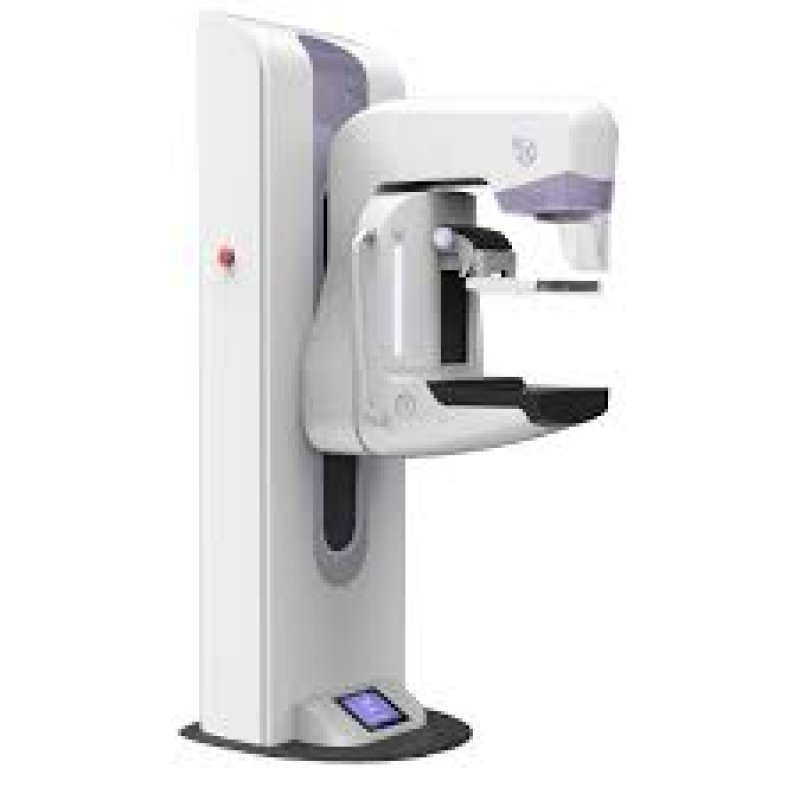
Mammogram Machine
Sold & Shipped By
Official Store
Price on Request
Product Code MEN-2026-0041
Condition New
Availability On request
Warranty
Sub-Category Scanning Machine
Low-Energy X-ray Tube: Operates in the 20-40 kVp range to maximize contrast between fat, soft tissue, and calcifications.
Target and Filter Materials: Uses molybdenum (Mo) or rhodium (Rh) targets/filters to produce specific X-ray energies optimized for breast tissue.
High-Resolution Digital Detector: Captures images electronically for immediate viewing, manipulation, and storage, replacing older film-based systems.
Rotational Gantry: The X-ray tube and detector can rotate to capture various views, including cranial-caudal (top-down) and mediolateral oblique (angled) images.
Anti-Scatter Grids: Positioned between the breast and the detector to reduce scatter radiation, enhancing contrast, particularly in dense breasts.
Automatic Exposure Control (AEC): Adjusts the radiation dosage and time based on the thickness and density of the breast.
Magnification Capability: Allows for detailed, magnified images of specific areas of concern.
Computer-Aided Detection (CAD): Software that highlights suspicious areas, aiding radiologists in analysis.
Target and Filter Materials: Uses molybdenum (Mo) or rhodium (Rh) targets/filters to produce specific X-ray energies optimized for breast tissue.
High-Resolution Digital Detector: Captures images electronically for immediate viewing, manipulation, and storage, replacing older film-based systems.
Rotational Gantry: The X-ray tube and detector can rotate to capture various views, including cranial-caudal (top-down) and mediolateral oblique (angled) images.
Anti-Scatter Grids: Positioned between the breast and the detector to reduce scatter radiation, enhancing contrast, particularly in dense breasts.
Automatic Exposure Control (AEC): Adjusts the radiation dosage and time based on the thickness and density of the breast.
Magnification Capability: Allows for detailed, magnified images of specific areas of concern.
Computer-Aided Detection (CAD): Software that highlights suspicious areas, aiding radiologists in analysis.
3D Mammogram machine
Preparation: Wear comfortable clothing, as you will need to undress from the waist up. Do not apply deodorant, antiperspirant, powder, or lotion, as these can show up as white spots on the image.
Positioning: The patient stands in front of the machine. A technologist positions one breast on a specialized platform.
Compression: A clear plastic paddle lowers to compress the breast tissue. This ensures tissue is spread out, minimizes motion, and allows for lower radiation doses.
Imaging: The machine moves in an arc, capturing multiple images (similar to "slices") in a few seconds
Views: The process is repeated for each breast, usually involving a top-to-bottom and an angled side view.
Comfort: While compression may be uncomfortable or feel like pressure, it is temporary.
Duration: The entire exam typically takes about 20 minutes.
Positioning: The patient stands in front of the machine. A technologist positions one breast on a specialized platform.
Compression: A clear plastic paddle lowers to compress the breast tissue. This ensures tissue is spread out, minimizes motion, and allows for lower radiation doses.
Imaging: The machine moves in an arc, capturing multiple images (similar to "slices") in a few seconds
Views: The process is repeated for each breast, usually involving a top-to-bottom and an angled side view.
Comfort: While compression may be uncomfortable or feel like pressure, it is temporary.
Duration: The entire exam typically takes about 20 minutes.