REF: MEN-2026-0323
Therapy
Shoulder Pulley
Sold & Shipped By
Official Store
Price on Request
Product Code MEN-2026-0323
Condition New
Availability On request
Warranty
Sub-Category Therapy
Over-the-Door Mounting: Most models feature a sturdy webbing strap or metal bracket that fits over any standard door, allowing for easy, tool-free installation and use at home or while traveling.
Adjustable Rope Length: The rope can be easily adjusted to the user's height and specific exercise needs by adjusting knots or using cord locks.
Ergonomic Handles: Designed for comfort and security, these handles are often made of foam or plastic to ensure a non-slip grip, even for those with limited hand strength.
Smooth-Glide Mechanism: High-quality pulleys ensure fluid, quiet movement during exercises to minimize friction and prevent jarring or uneven motion.
Progress Tracking: Many models include color-coded ropes or markings that allow users to track their range of motion progress and set goals.
Versatile Exercise Options: They support various motions, including internal/external rotation, abduction, and flexion, and can be used while sitting, standing, or lying down.
Durable Construction: Built with sturdy materials, such as nylon rope and durable pulley casings (e.g., zinc-coated), they are designed to withstand daily rehabilitation sessions.
Adjustable Rope Length: The rope can be easily adjusted to the user's height and specific exercise needs by adjusting knots or using cord locks.
Ergonomic Handles: Designed for comfort and security, these handles are often made of foam or plastic to ensure a non-slip grip, even for those with limited hand strength.
Smooth-Glide Mechanism: High-quality pulleys ensure fluid, quiet movement during exercises to minimize friction and prevent jarring or uneven motion.
Progress Tracking: Many models include color-coded ropes or markings that allow users to track their range of motion progress and set goals.
Versatile Exercise Options: They support various motions, including internal/external rotation, abduction, and flexion, and can be used while sitting, standing, or lying down.
Durable Construction: Built with sturdy materials, such as nylon rope and durable pulley casings (e.g., zinc-coated), they are designed to withstand daily rehabilitation sessions.
1. Structure and Design
Over-the-Door Anchor: Most models feature a sturdy webbing strap or a metal/plastic bracket with padding, allowing the system to securely hang over standard door frames.
Pulley Mechanism: A durable, smooth-rolling nylon or stainless steel pulley wheel (approx. 3.9-inch in some, smaller in others) reduces friction during exercises.
Handles: Typically, two handles are included, featuring soft foam grips for comfort or ergonomic molded rubber for a secure hold. Some models include adjustable stoppers on the handles to track progress.
Rope Length: The rope is generally a durable braided nylon, with lengths typically around 85 inches (approx. 7 feet), providing enough room for seated or standing exercises.
2. Physical Specifications
Weight: Extremely lightweight, generally weighing between 5 and 10 ounces (approx. 0.16–0.5 kg), making them highly portable.
Material: Constructed from durable, high-strength nylon cord, plastic or stainless steel pulleys, and foam or rubber handles.
Compatibility: Designed to fit on most standard 2-inch wide doors.
3. Functional Features
Adjustable Rope: The rope length is easily adjustable, allowing users to customize the length to their height and specific rehabilitation goals.
Color-Coded Progress Tracking: Some models (e.g., TheraBand) feature a color-coded rope divided into sections to help patients visually track their progress and range of motion.
Portability: Many models come with a travel pouch for easy transport to home, office, or gym.
Versatility: Suitable for various exercises, including abduction, flexion, and internal/external rotation.
4. Safety and Durability
Weight Capacity: Designed to support the weight of the arms; however, users should check manufacturer specs for specific load limits.
Maintenance: Generally easy to maintain, requiring occasional checks for fraying on the rope and sometimes cleaning with a disinfectant wipe.
Non-Slip Mechanism: Many modern designs incorporate non-slip straps to prevent the pulley from moving during exercise.
Over-the-Door Anchor: Most models feature a sturdy webbing strap or a metal/plastic bracket with padding, allowing the system to securely hang over standard door frames.
Pulley Mechanism: A durable, smooth-rolling nylon or stainless steel pulley wheel (approx. 3.9-inch in some, smaller in others) reduces friction during exercises.
Handles: Typically, two handles are included, featuring soft foam grips for comfort or ergonomic molded rubber for a secure hold. Some models include adjustable stoppers on the handles to track progress.
Rope Length: The rope is generally a durable braided nylon, with lengths typically around 85 inches (approx. 7 feet), providing enough room for seated or standing exercises.
2. Physical Specifications
Weight: Extremely lightweight, generally weighing between 5 and 10 ounces (approx. 0.16–0.5 kg), making them highly portable.
Material: Constructed from durable, high-strength nylon cord, plastic or stainless steel pulleys, and foam or rubber handles.
Compatibility: Designed to fit on most standard 2-inch wide doors.
3. Functional Features
Adjustable Rope: The rope length is easily adjustable, allowing users to customize the length to their height and specific rehabilitation goals.
Color-Coded Progress Tracking: Some models (e.g., TheraBand) feature a color-coded rope divided into sections to help patients visually track their progress and range of motion.
Portability: Many models come with a travel pouch for easy transport to home, office, or gym.
Versatility: Suitable for various exercises, including abduction, flexion, and internal/external rotation.
4. Safety and Durability
Weight Capacity: Designed to support the weight of the arms; however, users should check manufacturer specs for specific load limits.
Maintenance: Generally easy to maintain, requiring occasional checks for fraying on the rope and sometimes cleaning with a disinfectant wipe.
Non-Slip Mechanism: Many modern designs incorporate non-slip straps to prevent the pulley from moving during exercise.
Setting Up the Shoulder Pulley
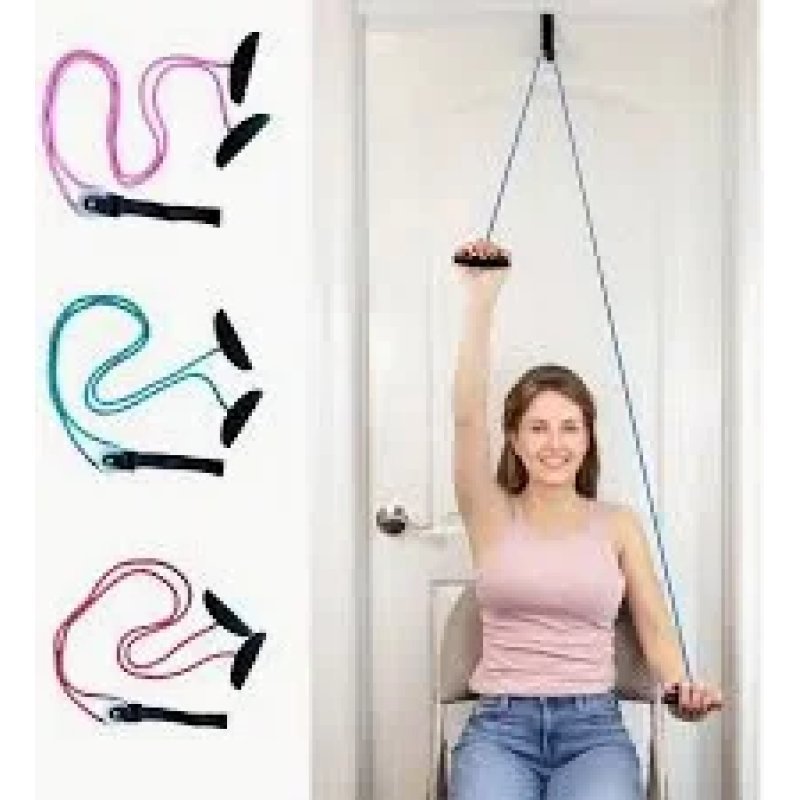
Placement: Attach the pulley anchor over the top of a door and close it securely.
Positioning: Sit in a chair or stool directly facing the door, about 10-12 inches away.
Setup: Hold one handle in each hand. The injured arm should remain relatively passive, acting as a guide while the strong arm does the work.
Key Exercises
Forward Elevation (Forward Raise): Face the door, holding handles with thumbs pointing up. Pull down with your unaffected arm to raise the affected arm forward and upward. Hold the stretch for 5-10 seconds, then slowly return to starting position.
Side Elevation (Side Circle): Sit facing away from the door (or side-on). Keep the injured arm out to the side and pull down with the good arm to lift the injured arm outward and upward.
Placement: Attach the pulley anchor over the top of a door and close it securely.
Positioning: Sit in a chair or stool directly facing the door, about 10-12 inches away.
Setup: Hold one handle in each hand. The injured arm should remain relatively passive, acting as a guide while the strong arm does the work.
Key Exercises
Forward Elevation (Forward Raise): Face the door, holding handles with thumbs pointing up. Pull down with your unaffected arm to raise the affected arm forward and upward. Hold the stretch for 5-10 seconds, then slowly return to starting position.
Side Elevation (Side Circle): Sit facing away from the door (or side-on). Keep the injured arm out to the side and pull down with the good arm to lift the injured arm outward and upward.