REF: MEN-2026-0257
Therapy
Elbow Crutches
Sold & Shipped By
Official Store
₦15,000.00
Product Code MEN-2026-0257
Condition New
Availability In Stock
Warranty
Sub-Category Crutches
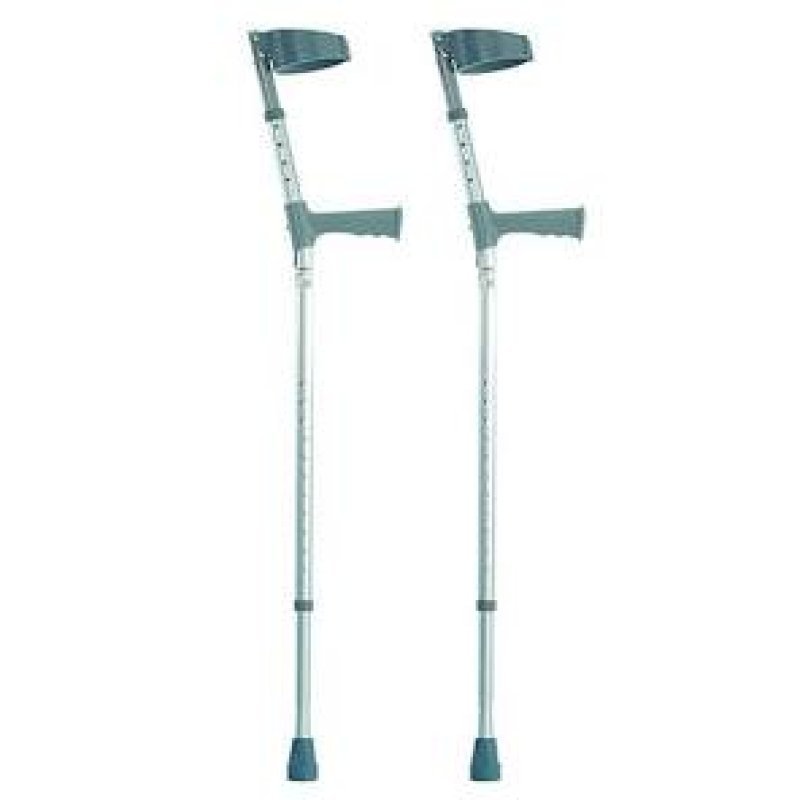
Adjustable Height & Cuff: Most models allow for height adjustment of the shaft and the position of the forearm cuff to suit the user’s arm length, ensuring proper support.
Ergonomic Design: Handles are often molded for comfort (anatomical grips) to spread pressure across the palm, reducing hand strain.
Forearm Cuff: A plastic or metal cuff (often hinged/open-cuff) wraps around the forearm, allowing the user to bear weight without solely relying on grip strength.
Lightweight & Durable Material: Commonly made from anodized aluminum or carbon fiber to ensure the crutches are strong yet easy to lift.
Non-Slip Rubber Ferrules: Tips are made of rubber to provide traction and stability on various surfaces.
Weight Capacity: Designed to support varying user weights, often up to 130kg or more, depending on the material.
Gutter Options: Some specialized models feature padded, trough-shaped armrests for users who cannot bear weight through their wrists.
Ergonomic Design: Handles are often molded for comfort (anatomical grips) to spread pressure across the palm, reducing hand strain.
Forearm Cuff: A plastic or metal cuff (often hinged/open-cuff) wraps around the forearm, allowing the user to bear weight without solely relying on grip strength.
Lightweight & Durable Material: Commonly made from anodized aluminum or carbon fiber to ensure the crutches are strong yet easy to lift.
Non-Slip Rubber Ferrules: Tips are made of rubber to provide traction and stability on various surfaces.
Weight Capacity: Designed to support varying user weights, often up to 130kg or more, depending on the material.
Gutter Options: Some specialized models feature padded, trough-shaped armrests for users who cannot bear weight through their wrists.
Material: Usually constructed from lightweight anodized aluminum or high-strength aluminum alloy, with plastic or rubberized components for handles and cuffs.
Weight: Very lightweight, typically between 0.5 kg and 1 kg per crutch.
Height Adjustment (Ground to Handle): Generally adjustable between 660 mm and 940 mm for standard adult sizes. Extra-long models can extend from 82 cm to 109 cm.
Cuff Height (Handle to Armband): Adjustable between 200 mm and 275 mm on double-adjustable models.
Tube Diameter: Commonly 22 mm for the lower tube and 19 mm for the upper tube.
Weight: Very lightweight, typically between 0.5 kg and 1 kg per crutch.
Height Adjustment (Ground to Handle): Generally adjustable between 660 mm and 940 mm for standard adult sizes. Extra-long models can extend from 82 cm to 109 cm.
Cuff Height (Handle to Armband): Adjustable between 200 mm and 275 mm on double-adjustable models.
Tube Diameter: Commonly 22 mm for the lower tube and 19 mm for the upper tube.
Setup: The handle should align with your wrist crease when standing, and the forearm cuff should be just below the elbow, allowing for free movement.
Walking (Non-Weight Bearing/Partial Weight Bearing):
Place both crutches about a step ahead of you.
Move the injured leg forward, keeping it between the crutches.
Push down through the hand grips, transferring your weight to your arms, and step through with your good leg.
Do not let your feet get in front of the crutches, as this can cause instability.
Going Up Stairs:
Hold the railing with one hand and a crutch in the other, or use both crutches.
Step up with your good leg first.
Bring the injured leg and crutches up to the same step.
Going Down Stairs:
Put the crutches and the injured leg down on the lower step first.
Step down with your good leg.
Sitting Down:
Back up to the chair until you feel it against your legs.
Remove your arms from the cuffs (if necessary) and hold both crutches in one hand by the handles.
Hold the armrest with your free hand and slowly lower yourself down.
Standing Up:
Slide forward to the edge of the chair.
Hold both crutches in the hand on the side of your injured leg.
Push up from the chair armrest and stand.
Walking (Non-Weight Bearing/Partial Weight Bearing):
Place both crutches about a step ahead of you.
Move the injured leg forward, keeping it between the crutches.
Push down through the hand grips, transferring your weight to your arms, and step through with your good leg.
Do not let your feet get in front of the crutches, as this can cause instability.
Going Up Stairs:
Hold the railing with one hand and a crutch in the other, or use both crutches.
Step up with your good leg first.
Bring the injured leg and crutches up to the same step.
Going Down Stairs:
Put the crutches and the injured leg down on the lower step first.
Step down with your good leg.
Sitting Down:
Back up to the chair until you feel it against your legs.
Remove your arms from the cuffs (if necessary) and hold both crutches in one hand by the handles.
Hold the armrest with your free hand and slowly lower yourself down.
Standing Up:
Slide forward to the edge of the chair.
Hold both crutches in the hand on the side of your injured leg.
Push up from the chair armrest and stand.