COMMON EQUIPMENT FAILURES AND HOW TO AVOID THEM
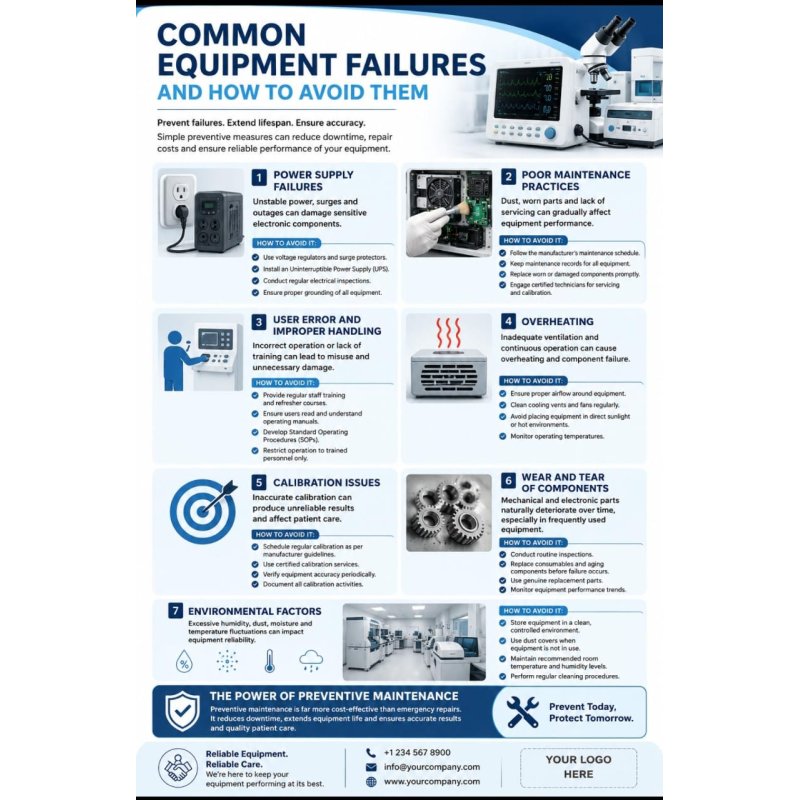
In every healthcare facility, laboratory, and diagnostic center, medical equipment plays a vital role in delivering accurate results and quality patient care. However, equipment failures can lead to downtime, inaccurate diagnoses, increased repair costs, and disruption of services.
Understanding common equipment problems and implementing preventive measures can significantly extend the lifespan of your devices and improve operational efficiency.
1. Power Supply Failures:
One of the most common causes of equipment malfunction is an unstable power supply. Voltage fluctuations, power surges, and sudden outages can damage sensitive electronic components.
√ How to Avoid It:
a.) Use high-quality voltage regulators and surge protectors.
b.) Install an Uninterruptible Power Supply (UPS) for critical equipment.
c.) Conduct regular electrical system inspections.
d.) Ensure proper grounding of all equipment.
2. Poor Maintenance Practices
Many equipment failures occur because routine maintenance is neglected. Dust accumulation, worn-out parts, and lack of servicing can gradually affect performance.
√ How to Avoid It:
a.) Follow the manufacturer's recommended maintenance schedule.
b.) Keep maintenance records for all equipment.
c.) Replace worn or damaged components promptly.
d.) Engage certified technicians for servicing and calibration.
3. User Error and Improper Handling
Even advanced medical equipment can fail prematurely when operated incorrectly. Lack of adequate training often leads to misuse and unnecessary damage.
√ How to Avoid It:
a.) Provide regular staff training and refresher courses.
b.) Ensure users read and understand operating manuals.
c.) Develop standard operating procedures (SOPs).
d.) Restrict operation to trained personnel only.
4. Overheating
Equipment that operates continuously without adequate ventilation can overheat, leading to reduced performance and component failure.
√ How to Avoid It:
a.) Ensure proper airflow around equipment.
b.) Clean cooling vents and fans regularly.
c.) Avoid placing equipment in direct sunlight or hot environments.
d.) Monitor operating temperatures when applicable.
5. Calibration Issues
In laboratory and diagnostic equipment, inaccurate calibration can produce unreliable results and affect patient care.
√How to Avoid It:
a.) Schedule regular calibration according to manufacturer guidelines.
b.) Use certified calibration services.
c.) Verify equipment accuracy periodically.
d.) Document all calibration activities.
6. Wear and Tear of Components
Mechanical and electronic parts naturally deteriorate over time, especially in frequently used equipment.
√How to Avoid It:
a.) Conduct routine inspections.
b.) Replace consumables and aging components before failure occurs.
c.) Use genuine replacement parts.
d.) Monitor equipment performance trends.
7. Environmental Factors
Excessive humidity, dust, moisture, and temperature fluctuations can significantly impact equipment reliability.
√ How to Avoid It:
a.) Store equipment in a clean, controlled environment.
b.) Use dust covers when equipment is not in use.
c.)Maintain recommended room temperature and humidity levels.
d.) Perform regular cleaning procedures.
The Importance of Preventive Maintenance
Preventive maintenance is far more cost-effective than emergency repairs. Organizations that invest in regular servicing, staff training, and proper equipment management experience fewer breakdowns, longer equipment lifespan, and improved service delivery.
By identifying common causes of equipment failure and implementing proactive maintenance strategies, healthcare facilities and laboratories can maximize equipment performance, reduce downtime, and ensure consistent, reliable results.
Final Thoughts
Medical and laboratory equipment are valuable investments that require proper care and attention. A proactive approach to maintenance not only protects your investment but also supports accurate diagnoses, efficient workflows, and quality patient care. Remember, preventing equipment failure is always easier and less expensive than fixing it after it occurs.
← Back to Blog