HOW OFTEN SHOULD MEDICAL EQUIPMENT BE SERVICED?
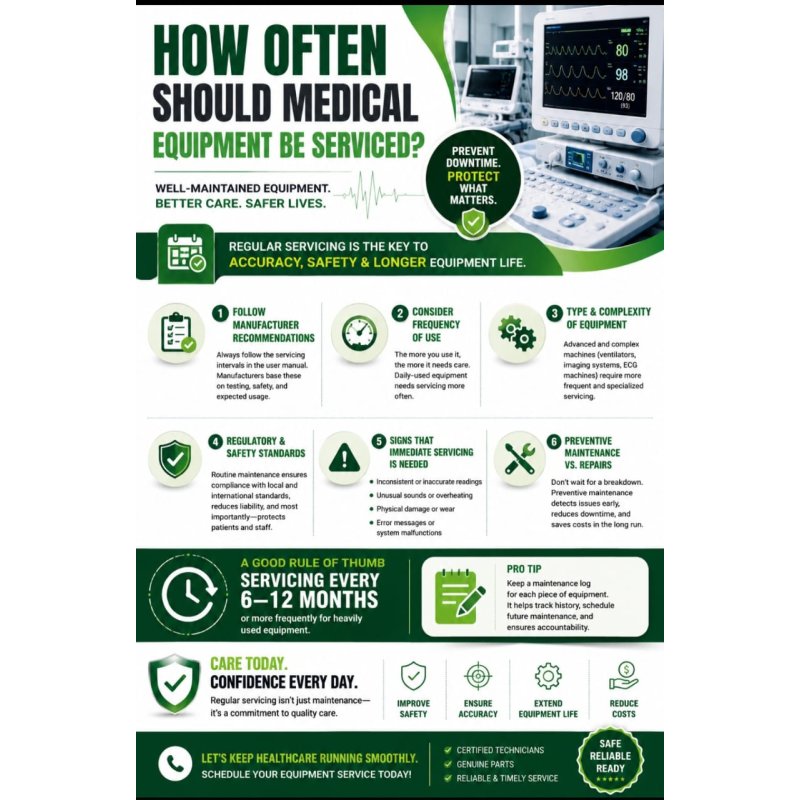
Medical equipment plays a critical role in patient care, diagnosis, and treatment. Whether in hospitals, clinics, or home settings, regular servicing is essential to ensure accuracy, safety, and longevity. But how often should medical equipment actually be serviced? The answer depends on several key factors.
1. Follow Manufacturer Recommendations
Every piece of medical equipment comes with a user manual that outlines servicing intervals. Manufacturers base these timelines on testing and expected usage. For example, devices like patient monitors or ultrasound machines may require servicing every 6–12 months, while smaller tools may need less frequent checks.
2. Consider Frequency of Use
Equipment used daily—such as blood pressure monitors, glucometers, or oxygen concentrators—should be serviced more often than rarely used devices. High-usage equipment is more prone to wear and tear, making regular maintenance crucial.
3. Type and Complexity of Equipment
Advanced machines (like ventilators, ECG machines, and imaging systems) typically require more frequent and specialized servicing compared to basic tools. The more complex the equipment, the more critical routine calibration and inspection become.
4. Regulatory and Safety Standards
Healthcare facilities are often required to follow local and international standards for equipment maintenance. Routine servicing ensures compliance, reduces liability, and most importantly, protects patients and healthcare providers.
5. Signs That Immediate Servicing Is Needed
Regardless of schedule, equipment should be serviced immediately if you notice:
√ Inconsistent or inaccurate readings
√Unusual sounds or overheating
√ Physical damage or wear
√ Error messages or system malfunctions
6. Preventive Maintenance vs. Repairs
Don’t wait for equipment to break down before servicing. Preventive maintenance helps detect issues early, reduces downtime, and saves costs in the long run. Think of it as an investment in reliability and performance.
Conclusion;
While servicing frequency varies, a good rule of thumb is to conduct routine checks every 6–12 months and more frequently for heavily used equipment. Staying proactive with maintenance not only extends the life of your devices but also ensures optimal performance and patient safety.
Pro Tip:
Keep a maintenance log for each piece of equipment. This helps track servicing history, schedule future maintenance, and ensures accountability.
← Back to Blog